
Start with what the canister already gives you
Folgers Gourmet Supreme is pre-ground coffee, so you will not be dialing in a grinder before your first cup. The 22.6-ounce canister is designed for standard coffee makers, and the medium-dark roast is described as smooth yet robust. That gives you a predictable starting point: a consistent grind and a blend built for everyday brewing.
The brewing variables left in your hands are the ones that actually change the cup — how much coffee you use, how much water you add, and how you combine the two. This guide walks through those in order, with a simple ratio you can adjust rather than a rigid recipe.
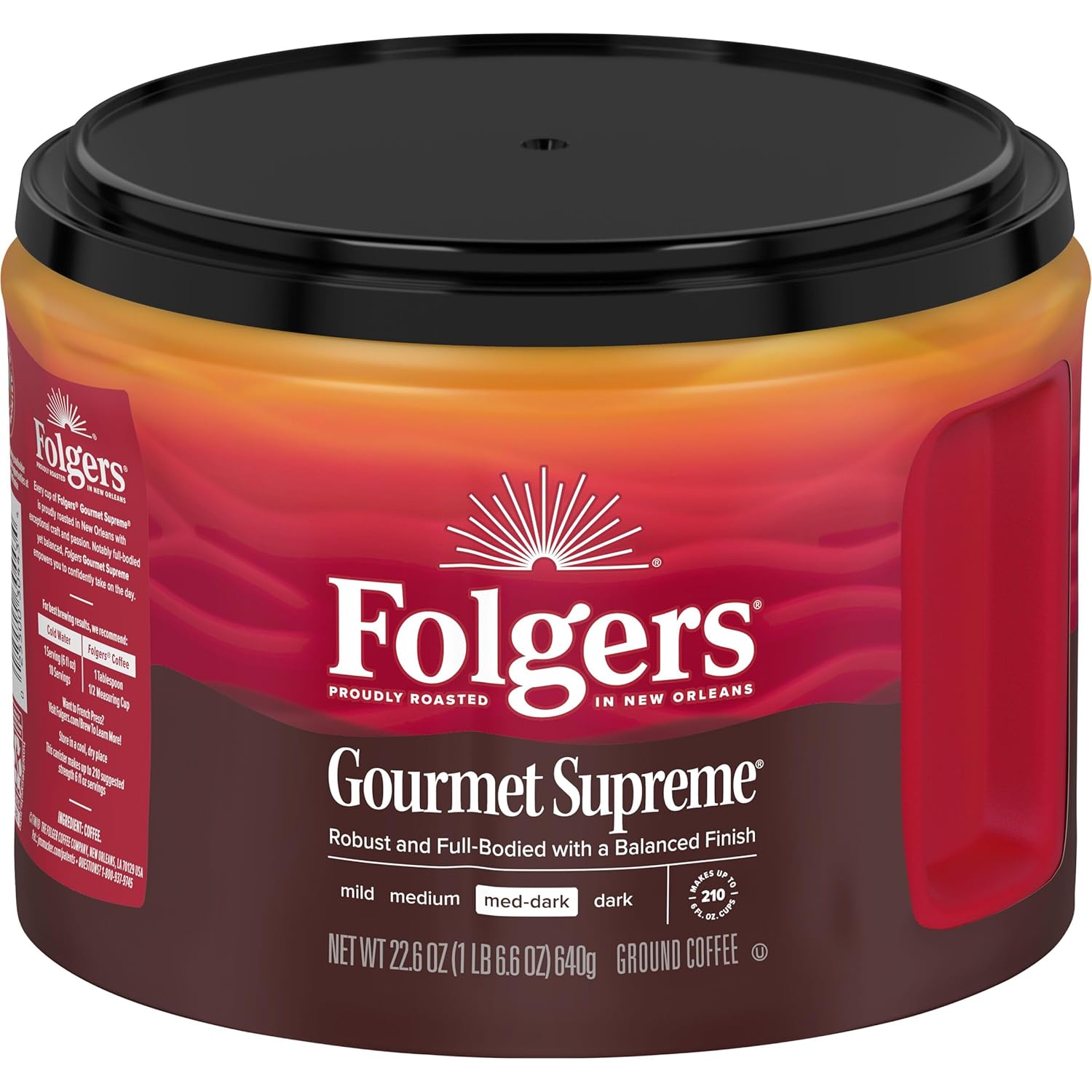
What the Folgers Gourmet Supreme canister confirms
- Folgers Gourmet Supreme Medium-Dark Roast Ground Coffee, 22.6 Ounce Canister: Folgers Gourmet Supreme Medium-Dark Roast Ground Coffee comes in a 22.6-ounce canister of pre-ground coffee. Because the coffee is already ground, you can skip grinding and go straight to measuring and brewing.

Folgers Gourmet Supreme Medium-Dark Roast Ground Coffee, 22.6 Ounce Canister - Folgers Gourmet Supreme Medium-Dark Roast Ground Coffee, 22.6 Ounce Canister: The medium-dark roast is described as offering a smooth yet robust taste experience. That flavor profile tells you what to aim for: a full-bodied cup without the sharpness of a very dark roast.
- Folgers Gourmet Supreme Medium-Dark Roast Ground Coffee, 22.6 Ounce Canister: The ground coffee format is intended for use with standard coffee makers. If you own a drip machine, you already have the most direct way to brew this coffee.
Ground coffee grind size explained — and why you don't need to change it
Grind size is the texture of the coffee particles, and it controls how quickly water moves through them. Fine grounds extract faster and suit methods where water contacts the coffee briefly; coarse grounds slow extraction and suit longer steeping. Pre-ground coffee fixes this variable for you.
Folgers Gourmet Supreme is ground for standard coffee makers, which is a medium grind suited to drip brewing. You cannot re-grind it finer or coarser at home, so treat the grind as a given. If you want to brew it another way, choose a method that tolerates a medium grind rather than one that demands a specific texture. The supplied information does not confirm which methods beyond standard coffee makers the manufacturer recommends, so test small batches before committing a full pot.
A beginner's coffee-to-water ratio in tablespoons
Use this as a starting point, then adjust one variable at a time. The goal is a repeatable measurement you can taste and correct, not a number you have to memorize.
- 1. Pick a simple baseline: A common starting point is roughly one tablespoon of ground coffee per six fluid ounces of water. Treat it as a baseline, not a rule — the right ratio depends on your taste and your brewer.
- 2. Measure the coffee level, not heaped: Scoop level tablespoons so each brew uses the same amount. A heaped spoon adds coffee unevenly and makes it hard to compare one cup to the next.
- 3. Measure water separately: Mark the water level on your carafe or use a measuring cup. Knowing both numbers lets you change the ratio deliberately instead of guessing.
- 4. Taste and adjust by one step: If the cup is too weak, add a small amount of coffee or reduce the water slightly. If it is too strong or harsh, do the opposite. Change only one thing per brew so you know what worked.
- 5. Write down the ratio you liked: Once you find a cup you enjoy, record the tablespoons and water volume. That turns a one-off success into your house recipe for the rest of the canister.
How to brew ground coffee without a machine
You do not need a drip brewer to make Folgers Gourmet Supreme. Two low-equipment methods work with pre-ground coffee: a pour-over cone and a French press. Both rely on the same two numbers you already measured — coffee and water — plus a way to separate the grounds from the liquid.
For a pour-over, line a cone with a paper filter, add your measured grounds, and pour hot water over them in stages, letting the bed drain between additions. For a French press, combine the grounds and water, let the coffee steep, then press the plunger slowly to trap the grounds at the bottom. Because this coffee is ground for standard coffee makers, expect a medium-grind result: a French press may carry a little more sediment than with a coarse grind, and a pour-over should drain at a moderate pace. Neither method is confirmed in the supplied product information, so start with a small batch and adjust your ratio before brewing for a crowd.
Checkpoints that tell you the brew is on track
- The coffee bed looks even: In a drip machine or pour-over, water should wet the grounds evenly. Dry patches or a crater in the middle usually mean the water is channeling rather than extracting.
- The cup tastes balanced, not thin: Folgers Gourmet Supreme is described as smooth yet robust. A cup that tastes watery usually points to too little coffee for the water used, not a problem with the coffee itself.
- You can repeat it: The real test is whether your second and third brews taste like the first. Level tablespoons and a marked water line are the easiest way to get there.
Keeping the canister in good shape between brews
Ground coffee has more surface area exposed to air than whole beans, so storage matters more once the canister is open. Keep the lid closed between uses, store the canister in a cool, dry place away from direct heat, and avoid transferring the coffee into a container that lets in light and air. The supplied information does not specify a shelf life after opening, so rely on the packaging date and your own sense of aroma rather than a fixed number of weeks.
Buying the 22.6-ounce canister makes sense if you brew regularly enough to finish it while the coffee still smells fresh. If you drink one cup a day, a smaller format may suit you better; if you brew for a household every morning, the canister's size is an advantage. Match the package to your actual brewing rhythm rather than to the price per ounce alone.

